
While San Diego homeowners face a challenging sales market with homes sitting for 41 days on average, institutional investors just made a bold statement: they're betting $66 million that rentals are the future. Encinitas-based Ambient Communities secured $66.2 million in construction financing for Palm & Hollister Apartments, a 198-unit garden-style complex at 555 Hollister Street in San Diego's Palm City neighborhood, adjacent to the Palm Avenue MTS Trolley Station. This financing deal, arranged by Northmarq with lender Genesis Capital, signals remarkable investor confidence in San Diego's rental market despite broader housing market cooling. For homeowners weighing whether to sell their property or convert it to a rental, this development raises critical questions: What does institutional money pouring into rentals mean for individual landlords? And is competing with professionally-managed 198-unit complexes a battle worth fighting?
Understanding the $66M Deal: Why Investors Are All-In on San Diego Rentals
The Palm & Hollister Apartments project represents more than just another construction deal—it's a statement about where institutional capital sees opportunity. Genesis Capital provided up to 75% loan-to-cost financing with a three-year initial term and the option to roll into a mini-perm upon completion of construction. The transaction was structured to maximize development efficiency, with the property set to open in the first quarter of 2027 as the largest apartment development under construction in South County.
The project's unit mix reflects sophisticated market analysis: 89 one-bedroom apartments ranging from 542 to 720 square feet, 82 two-bedroom apartments of 863 to 941 square feet, and 27 three-bedroom apartments of 1,180 square feet. This distribution targets San Diego's growing renter demographic—professionals, young families, and workforce housing seekers who need quality, transit-accessible housing.
What makes this deal particularly significant is its timing. According to recent multifamily investment data, institutional investors deployed $23 billion in 2025 and increased their volume by 17 percent year-over-year, demonstrating that smart money remains bullish on rentals even as residential home sales slow. The fact that Genesis Capital approved this financing in late 2025—after months of market uncertainty—validates the rental market's fundamental strength.
Transit-Oriented Development: The New Investment Magnet
Location matters, and the Palm & Hollister project's positioning adjacent to the Palm Avenue MTS Trolley Station and just one block east of Interstate 5 exemplifies the transit-oriented development (TOD) strategy driving institutional investment. San Diego has emerged as a leader in TOD policy, with Senate Bill 79 requiring the city to permit multi-family homes near Transit-Oriented Development stops on land zoned for residential, commercial, or mixed-use development.
The city's Complete Communities Housing Solutions program allows developers to increase floor area ratio if they provide affordable units in "Sustainable Development Areas," which include neighborhoods within a one-mile walk of a major transit stop. This policy framework has created a fertile environment for large-scale multifamily projects that can achieve economies of scale impossible for individual landlords.
For homeowners in neighborhoods like Pacific Beach, La Jolla, Mission Beach, Ocean Beach, North Park, South Park, Hillcrest, University Heights, Normal Heights, and Downtown San Diego—areas with strong transit connectivity—this trend has important implications. While your single-family home may benefit from transit access, you're competing against professionally-managed complexes with amenities, on-site maintenance, and institutional backing when you enter the rental market.
Other major TOD projects underway include the SkyLINE Apartments at Rancho Bernardo Transit Station (100 units opening winter 2025-26) and a 147-unit affordable housing development in La Mesa beginning February 2025. These projects demonstrate that the institutional rental trend extends across San Diego County, not just South Bay.
San Diego's Rental Market Strength: The Numbers Behind the Confidence

Why are institutional investors so confident in San Diego rentals? The data tells a compelling story. According to the Southern California Rental Housing Association's March 2025 survey, San Diego County's vacancy rate plummeted to 3.6%, down from 6.36% in 2024. Within the City of San Diego specifically, the vacancy rate fell to an extremely tight 3.12%, down from 4.22% previously.
This dramatic vacancy rate compression occurred alongside meaningful rent growth. Countywide rents increased 4.1% year-over-year, while the City of San Diego experienced a more robust 9.3% spike. The median rent in San Diego now stands at approximately $2,800 per month, which is 53% higher than the national average of $1,827. Looking ahead, San Diego County rental prices are projected to increase by 5% from mid-2025 to mid-2026, resulting in a $100-$150 monthly price increase depending on unit type.
Construction activity supports this bullish rental outlook. San Diego is expected to see over 2,800 new apartments completed in 2025, with supply volumes expected to increase by more than 70% over the next 12 months. Over 4,000 new market-rate units are projected for 2026, with many projects concentrated in areas like Kearny Mesa, Downtown, Mission Valley, and the transit corridors.
Alan Pentico, Executive Director of the Southern California Rental Housing Association, noted that "renewed demand and lower vacancies" reflect current conditions, though he expressed "cautious optimism as new housing development begins to catch up." For institutional investors, these metrics—sub-4% vacancy rates combined with 5%+ annual rent growth—create an attractive risk-adjusted return profile that justifies large construction loans.
How New Apartment Construction Affects Individual Homeowners
If you own a home in San Diego and are considering your options, the influx of institutional rental construction creates both challenges and clarity. On one hand, strong rental fundamentals suggest that becoming a landlord could generate meaningful income. On the other hand, you'll be competing against professionally-managed complexes with significant advantages.
Consider what professional apartment complexes offer that individual landlords struggle to match: 24/7 maintenance response, on-site management, modern amenities (gyms, pools, community spaces), professional marketing, streamlined application processes, and economies of scale on repairs and improvements. These complexes typically maintain vacancy rates of 4-5% compared to 8-12% for individual landlords, according to industry benchmarks.
The residential sales market context also matters. As of December 2025, San Diego's median home price for single-family homes stands at $1.05 million (up 3.0% year-over-year), while the median according to Attom Data Solutions is $875,000. More importantly, homes are taking 41-43 days to sell, representing a significant increase from previous years. Days on market increased 19.4% for detached homes and 32.4% for attached homes year-over-year.
This slowdown creates a tempting calculus: "If my home isn't selling quickly, maybe I should rent it out and wait for the market to improve." However, this thinking doesn't account for the operational realities and opportunity costs of being a landlord in a market increasingly dominated by institutional players.
For homeowners in high-demand neighborhoods like Point Loma, Little Italy, Banker's Hill, Golden Hill, City Heights, El Cerrito, Rolando, College Area, Allied Gardens, Del Cerro, and San Carlos, the decision becomes even more nuanced. These areas often command premium rents but also face competition from both new apartment complexes and other individual landlords making the same "rent instead of sell" calculation.
The Reality Check: Costs and Challenges of Being a San Diego Landlord
Before you decide to compete with Ambient Communities' 198-unit complex, let's examine the actual costs and challenges of becoming a landlord in San Diego. Property management fees typically range from 8-12% of monthly rental income in San Diego, averaging around $210-$300 per month on a $3,000 rental. If you hire professional management—and competing effectively often requires it—you're immediately reducing your net income.
Tenant placement fees range from $400-500, with some companies charging up to one month's rent. Setup fees can run $300-500, maintenance fees bill at $50-60 per hour, and lease renewal fees typically cost $200-300. Beyond management costs, California landlords spend approximately 1-4% of the property's value annually on maintenance, repairs, and improvements.
San Diego's regulatory environment adds complexity. The city is moderately landlord-friendly but leans toward tenant protections. You can only raise rent twice per year at most, and the total of these increases cannot exceed 5% plus the percentage change in local cost of living or 10%, whichever is lower. The maximum tenant screening fee is $62.02 as of 2024, and landlords face strict requirements around habitability, maintenance, and eviction procedures.
Being a landlord requires significant time commitment, ranging from 2-5 hours per unit per week, including handling tenant concerns, property maintenance, rent collection, and other managerial tasks. One common challenge San Diego landlords encounter is navigating tenant turnover, maintenance emergencies, and the stress of collecting rent from difficult tenants.
More than 65% of San Diego homeowners hold over 50% equity in their homes, meaning most have substantial wealth tied up in their properties. The question isn't whether you can rent your home—it's whether competing with institutional investors for tenants while managing all these costs and regulations is the best use of your equity and time.
Why Institutional Investors Choose New Construction Over Existing Homes
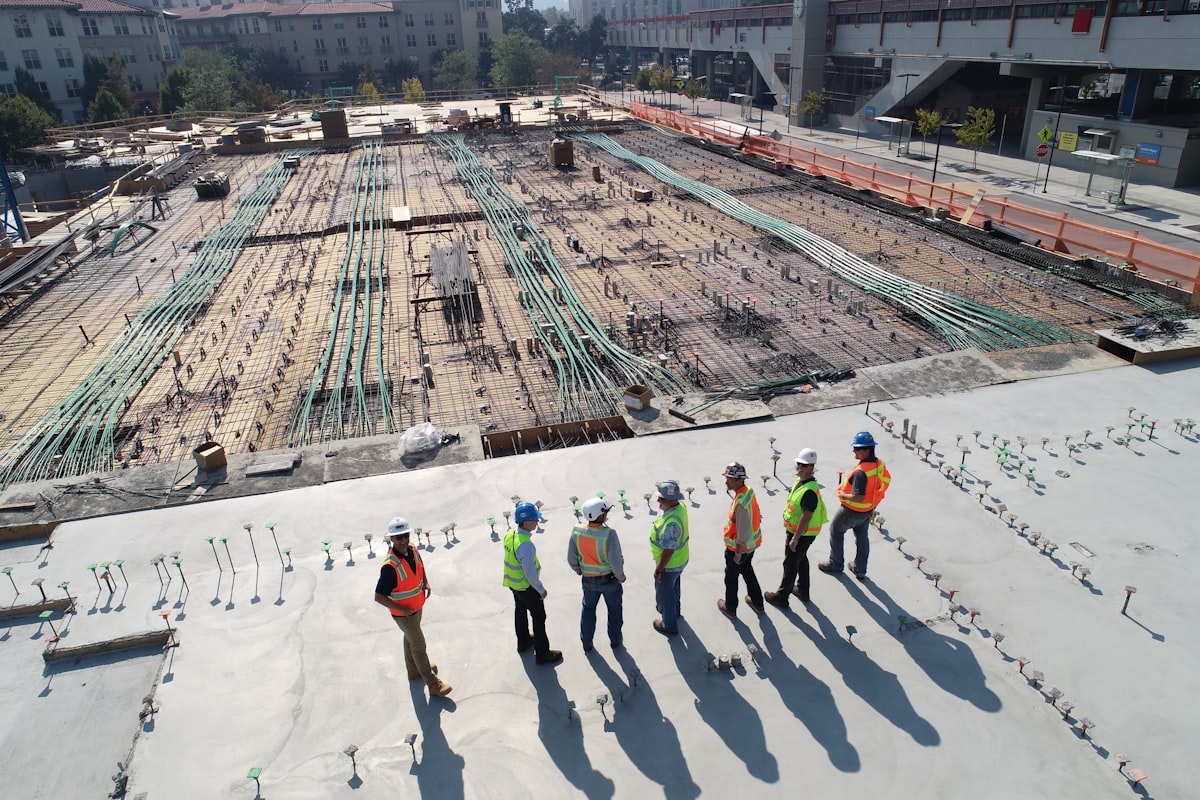
Understanding why institutional investors like Ambient Communities build new apartment complexes rather than purchase existing single-family homes reveals important market dynamics. First, new construction allows complete control over unit mix, amenities, and operational efficiency. The Palm & Hollister project's specific unit sizes and layout weren't accidental—they were engineered to maximize rent per square foot while appealing to San Diego's renter demographic.
Second, multifamily properties achieve economies of scale impossible in single-family rentals. Maintenance costs, management overhead, and capital improvements spread across 198 units create per-unit economics that individual landlords can't replicate. Professional complexes also benefit from bulk purchasing power on everything from appliances to insurance.
Third, transit-oriented development positions create competitive moats. By securing financing for properties adjacent to trolley stations, developers tap into a tenant pool prioritizing walkability and public transit access—a growing demographic in San Diego. Recent data shows that walkable urban neighborhoods like North Park have seen home values rise 4% year-over-year as buyers and renters increasingly value transit access and neighborhood amenities.
Fourth, institutional investors operate on different return timelines and capital structures than individual homeowners. Genesis Capital's 75% loan-to-cost financing at institutional rates allows Ambient Communities to build at scale with manageable leverage. Individual homeowners considering conversion to rental typically can't access similar financing structures, putting them at a structural disadvantage.
Multifamily construction starts are expected to be 74% below their 2021 peak by mid-2025, and 30% below their pre-pandemic average, meaning that projects receiving financing today are selectively chosen winners. The fact that Palm & Hollister secured funding in this environment speaks to underwriters' confidence in the project's fundamentals—confidence built on professional management, transit access, and institutional operational expertise.
The Cash Buyer Alternative: Accessing Your Equity Without the Landlord Competition
For San Diego homeowners watching institutional investors pour $66 million into rentals while their own homes sit on the market for 41 days, there's a third option beyond traditional selling or becoming a landlord: working with San Diego Fast Cash Home Buyer. Cash buyers in San Diego can close transactions within 7 to 14 days, sometimes even sooner, compared to 30-45 days for financed purchases and the 6-12 months typically needed to stabilize a rental property.
Cash transactions eliminate the common pain points of traditional sales: no repairs or upgrades required, no staging or endless showings, no financing contingencies that fall through, and no waiting for appraisals. Most cash buyers purchase properties as-is, meaning you can sell even if your home needs significant work—work that would be required before renting to compete with new apartment complexes.
The speed advantage is particularly valuable in the current market. While institutional investors lock up financing for large projects, individual homeowners face opportunity costs when capital remains tied up in a single property. Cash-out refinancing hit a nearly three-year high in 2025, with the average cash-out refinance resulting in homeowners pulling $94,000 in home equity while raising their interest rate by 1.45 percentage points. For many, selling to a cash buyer provides better economics than refinancing at higher rates or navigating the landlord landscape.
Consider the math: if your home would rent for $3,000 per month, you'd gross $36,000 annually. Subtract 10% for management fees ($3,600), 10% for vacancy and turnover based on individual landlord averages ($3,600), 2% for maintenance ($21,000 if your home is worth $1,050,000 at San Diego's median), property taxes, insurance, and potential HOA fees—and your net return becomes far less attractive, especially when accounting for time and stress.
For homeowners in neighborhoods like Clairemont, Bay Park, Linda Vista, Kearny Mesa, Serra Mesa, East Village, and throughout San Diego County, the decision often comes down to: do you want to compete with professionally-managed 198-unit complexes for tenants, or do you want to access your equity cleanly and move on to your next chapter?
Cash buyers serve a specific market segment: homeowners who prioritize certainty, speed, and simplicity over squeezing maximum sale price from the market. While cash offers typically come in below retail value—often 10-30% less—they eliminate months of carrying costs, management headaches, and the risk of betting on rental market performance against institutional competition.
Market Implications: What This Trend Means for Your Selling Decision
The $66 million Palm & Hollister financing is not an isolated event—it's part of a broader trend of institutional capital flowing into San Diego rental housing. Permanent loan financing amounts increased 36 percent year-over-year in the multifamily sector, signaling that capital availability is no longer serving as a significant barrier to investment activity. Multifamily is the most preferred asset class for commercial real estate investors in 2025, with strong renter demand driving improving occupancy and accelerating rent growth.
What does this mean for your property decision? First, if you're considering becoming a landlord, understand you're entering a market where institutional players have significant advantages. Professional complexes will continue to expand, putting pressure on individual landlords to maintain competitive amenities, responsive management, and professional marketing—all while operating at higher per-unit costs.
Second, the residential sales market's slower pace (41-day average listing time, homes receiving an average of 3 offers) creates decision fatigue. Waiting for the "perfect" traditional buyer while institutional investors snap up rental market share isn't a passive decision—it's an active bet that residential sales will accelerate before rental competition intensifies further.
Third, home equity levels present opportunity. More than 65% of San Diego homeowners hold over 50% equity in their homes, meaning most have substantial flexibility in how they access that wealth. The question is whether rental income (minus all costs and hassle) or a clean exit via cash sale better serves your financial goals.
For homeowners who've built significant equity during San Diego's appreciation cycle—homes have appreciated 4-6% annually over the past decade, with 5.1% appreciation in 2024 alone—the institutional rental boom represents both validation of San Diego's housing market strength and a warning about competition. Institutional investors wouldn't commit $66 million if they didn't see strong fundamentals. But they're building 198-unit complexes, not buying single-family homes, for a reason: the economics favor scale.
Finally, consider your personal circumstances and goals. If you're relocating, downsizing, dealing with inherited property, facing financial changes, or simply tired of property ownership, competing with institutional landlords adds complexity you may not want. The institutional rental boom doesn't make your home worthless—it makes the "rent instead of sell" decision more complicated than it appears at first glance.
Frequently Asked Questions
What is the significance of the $66 million Ambient Communities apartment project?
The $66 million construction financing secured by Ambient Communities for the 198-unit Palm & Hollister Apartments signals strong institutional investor confidence in San Diego's rental market despite broader housing market cooling. Genesis Capital provided up to 75% loan-to-cost financing, demonstrating that lenders and developers remain bullish on rental demand in transit-accessible locations. The project, located adjacent to the Palm Avenue MTS Trolley Station in San Diego's Palm City neighborhood, represents the largest apartment development under construction in South County and is scheduled to open in Q1 2027.
How does San Diego's rental market compare to national averages in 2025?
San Diego's rental market significantly outperforms national averages. The median rent in San Diego is approximately $2,800 per month, which is 53% higher than the national average of $1,827. San Diego County's vacancy rate stands at just 3.6%, compared to the national average of around 6%, indicating much tighter supply. Within the City of San Diego specifically, the vacancy rate dropped to an extremely tight 3.12%. Rents increased 4.1% countywide and 9.3% in the city year-over-year, with projections of an additional 5% increase from mid-2025 to mid-2026.
Should I rent out my San Diego home or sell it in the current market?
This decision depends on your financial goals, timeline, and willingness to compete with institutional landlords. While San Diego's rental market shows strong fundamentals (3.6% vacancy rate, $2,800 median rent, 5% projected annual rent growth), individual landlords face significant costs and challenges. Property management fees run 8-12% of monthly rent ($210-$300 on a $3,000 rental), maintenance costs 1-4% of property value annually, and individual landlords typically experience 8-12% vacancy rates versus 4-5% for professional complexes. With homes taking 41 days to sell on average and the median home price at $1.05 million, the opportunity costs of landlording versus accessing equity through sale should be carefully considered. More than 65% of San Diego homeowners hold over 50% equity, meaning most have substantial wealth that could be deployed elsewhere.
What are the actual costs of being a landlord in San Diego?
San Diego landlords face multiple cost categories: property management fees (8-12% of monthly rent, or $210-$300 on a $3,000 rental), tenant placement fees ($400-500 or up to one month's rent), setup fees ($300-500), maintenance fees ($50-60 per hour), lease renewal fees ($200-300), and annual maintenance costs (1-4% of property value, or $10,500-$42,000 on a $1.05 million home). Beyond financial costs, landlords spend 2-5 hours per unit per week on management tasks. San Diego's regulatory environment adds complexity with rent control provisions (maximum 2 increases per year, capped at 5% plus local cost of living change or 10%, whichever is lower), strict habitability requirements, and tenant-friendly eviction procedures. The maximum tenant screening fee is limited to $62.02 as of 2024.
How long does it take to sell a home in San Diego compared to renting it out?
As of December 2025, San Diego homes take an average of 41-43 days to sell through traditional listings, with days on market increasing 19.4% for detached homes year-over-year. Cash buyers can close in 7-14 days, sometimes even sooner. In contrast, stabilizing a rental property typically takes 6-12 months when accounting for property preparation, tenant screening, lease signing, and collecting first month's rent and deposits. Traditional financed home sales take 30-45 days to close once under contract. For homeowners seeking liquidity, cash sales provide the fastest access to equity, followed by traditional sales, with rental conversion being the slowest path to accessing home equity.
Why are institutional investors building apartments instead of buying single-family homes?
Institutional investors favor new apartment construction over single-family home purchases for several strategic reasons: economies of scale (maintenance, management, and capital improvement costs spread across many units), complete control over unit mix and amenities optimized for target demographics, access to favorable financing (Genesis Capital provided 75% loan-to-cost for Palm & Hollister), transit-oriented development advantages that create competitive moats, and professional operational systems that achieve 4-5% vacancy rates versus 8-12% for individual landlords. The Palm & Hollister project's 198 units allow per-unit economics impossible in single-family rentals. Additionally, multifamily properties align better with institutional investment timelines and return requirements, with cap rates in the mid-5% range and strong rent growth projections of 5% annually.
What is transit-oriented development and why does it matter to homeowners?
Transit-oriented development (TOD) refers to housing built within walking distance of major transit stops—in Palm & Hollister's case, adjacent to the Palm Avenue MTS Trolley Station. TOD matters because it attracts institutional investment, as evidenced by the $66 million financing, and appeals to a growing demographic of renters prioritizing walkability and public transit access. San Diego's policy framework supports TOD through Senate Bill 79 (requiring multi-family home permits near transit stops) and the Complete Communities Housing Solutions program (allowing increased floor area ratios for projects with affordable units near transit). For homeowners in transit-accessible neighborhoods like North Park, Downtown, Mission Valley, and areas along trolley lines, this means increased competition from professionally-managed apartment complexes targeting the same renter demographic. Recent data shows walkable urban neighborhoods have seen home values rise 4% year-over-year as transit access becomes increasingly valued.
How do professional apartment complexes compete with individual landlords?
Professional apartment complexes have significant competitive advantages over individual landlords: 24/7 on-site maintenance and management, modern amenities (gyms, pools, community spaces, package services), professional marketing and leasing systems, streamlined online application and rent payment processes, economies of scale on repairs and improvements (bulk purchasing power), lower vacancy rates (4-5% versus 8-12% for individual landlords), dedicated property management teams, consistent property standards, and institutional backing that allows faster response to market changes. The Palm & Hollister project's 198 units enable amenity investments and service levels that single-property landlords cannot economically replicate. For individual homeowners considering rental conversion, competing effectively often requires hiring professional property management at 8-12% of rent, which reduces net returns while still not matching the tenant experience of purpose-built apartment communities.
What are the benefits of selling to a cash home buyer versus traditional listing?
Cash home buyers offer several advantages over traditional listings: closing speed (7-14 days versus 41-day average listing time plus 30-45 day closing), no repair or upgrade requirements (as-is purchases), no staging or endless showings, no financing contingencies that might fall through, no appraisal requirements, elimination of months of carrying costs (mortgage, taxes, insurance, maintenance), and certainty of closing. While cash offers typically come in 10-30% below market value, they eliminate the opportunity costs and uncertainty of traditional sales. For homeowners who've decided not to compete with institutional landlords for rental tenants, cash sales provide the fastest path to accessing equity and moving forward. This is particularly valuable for those relocating, downsizing, dealing with inherited property, or facing financial changes where speed and certainty outweigh maximizing sale price.
What does the institutional rental boom mean for San Diego homeowners' equity?
The institutional rental boom validates San Diego's housing market strength—investors wouldn't commit $66 million if fundamentals were weak—but complicates the "rent instead of sell" decision. More than 65% of San Diego homeowners hold over 50% equity in their homes, meaning most have substantial wealth positioned in their properties. The rental boom suggests rental income remains viable, but institutional competition pressures individual landlords on amenities, management quality, and operational efficiency. With permanent loan financing amounts increasing 36% year-over-year in multifamily and over 4,000 new market-rate units projected for 2026, the competitive landscape will intensify. For homeowners, this means carefully evaluating whether rental income (minus management fees, maintenance, vacancy costs, and time commitment) or accessing equity through sale better serves long-term financial goals. Home appreciation of 4-6% annually over the past decade has built substantial equity, but deploying that equity wisely—whether through continued ownership, rental conversion, or sale to pursue other opportunities—requires clear-eyed assessment of the institutional competition landscape.
Conclusion: Your Property, Your Decision
The $66 million Palm & Hollister Apartments financing represents more than a single construction deal—it's a signal about where institutional money sees opportunity in San Diego real estate. While investor confidence in the rental market remains strong, with 3.6% vacancy rates and 5% projected annual rent growth, individual homeowners face a different calculation. Competing with professionally-managed 198-unit complexes requires significant capital, time, and operational expertise that most homeowners don't have or want to develop.
For San Diego homeowners with substantial equity—and more than 65% hold over 50% equity in their homes—the question isn't whether rental markets are strong. The question is whether becoming a landlord in a market increasingly dominated by institutional players serves your financial goals better than accessing your equity through sale. With homes taking 41 days to sell through traditional channels and cash buyers able to close in 7-14 days, your options are more flexible than you might think.
If you're weighing selling versus renting and want to skip the landlord competition entirely, San Diego Fast Cash Home Buyer can provide a fair cash offer that lets you exit cleanly while institutional investors fight over rental tenants. Contact us today for a no-obligation consultation about your property and discover how quickly you can access your home equity without the headaches of competing with $66 million apartment projects.
Call us at +1-619-777-1314 or request a free consultation online.