California Legislature Fast-Tracks Midway Rising: $4B Sports Arena Development Gets Environmental Lawsuit Shield August 31, 2026
Breaking News: California Legislature Removes Final Legal Barrier for Midway Rising
On August 31, 2026, California lawmakers delivered a decisive blow to opponents of the $3.9 billion Midway Rising development, passing Senate Bill 344 with overwhelming bipartisan support. The legislation, authored by Senator Akilah Weber Pierson of La Mesa, shields the massive 49-acre redevelopment project from future environmental lawsuits under the California Environmental Quality Act (CEQA).
The Assembly approved SB 344 with 72 votes out of a possible 80, followed by unanimous Senate approval just hours before the legislative session ended. Governor Gavin Newsom's signature would immediately protect developers from the environmental litigation that has plagued San Diego's Midway District ambitions for years.
For Point Loma and Ocean Beach homeowners, this legislative intervention fundamentally changes the calculus. The project—which includes 4,250 housing units, a 16,000-seat professional arena, 130,000 square feet of commercial space, and 14.5 acres of parks—is no longer a possibility facing legal uncertainty. It's now virtually unstoppable, with developer Brad Termini of Zephyr expecting groundbreaking by the end of 2026.
The dual government action on August 31, 2026, creates an urgent 90-120 day decision window for peninsula homeowners who want to avoid 7-10 years of construction disruption affecting 50,000 new residents and approximately 20,000 additional vehicles in less than one square mile.

What Senate Bill 344 Actually Does: Environmental Lawsuit Shield Explained
Senate Bill 344 represents an extraordinary legislative intervention that allows the Midway Rising developer to use an existing environmental review of the project to comply with CEQA requirements. More critically, it immediately shields developers from potential environmental lawsuits that have historically delayed or killed major California developments.
The legislation follows a pattern established in 2013, when California lawmakers approved streamlined environmental permitting for the Sacramento Kings stadium. However, the Midway Rising situation is unique: the state legislature is overriding local coastal protection laws and judicial rulings to fast-track a project that exceeds the neighborhood's 30-foot building height limit by 135 feet—the planned arena stands at 165 feet tall.
Key Provisions of SB 344:
- • Specifies that the city's environmental review of Midway Rising complies with CEQA
- • Prevents future environmental lawsuits challenging the project's environmental impact report
- • Overrides the California Coastal Commission's 30-foot height restriction for the Midway District
- • Creates a legislative carveout specifically for this single development project
Critics, including the Audubon Society, raised concerns that the buildings could harm or kill migratory birds due to the height violations. San Diego Assemblymember Carl DeMaio voted against the bill, joining just one other lawmaker in opposition.
The eleventh-hour deal came together in closed-door negotiations just days before lawmakers concluded their session, sparking outrage among neighborhood groups who argue city officials did not adequately study environmental impacts. However, the legislative reality is clear: state lawmakers prioritized housing production over local environmental concerns.
Measure C Repeal: How San Diego City Council Cleared the Final Local Obstacle
While Senate Bill 344 addressed state-level environmental challenges, San Diego faced a parallel local legal problem: Measure C, the 2022 voter-approved ballot measure that exempted the Midway District from the city's 30-foot coastal height limit.
In January 2026, the California Supreme Court rejected San Diego's plea to preserve Measure C, leaving in place an appellate court ruling that found the city illegally put the ordinance before voters without adequately informing them about environmental impacts. The Supreme Court's decision to decline the matter meant the city had no choice but to comply with lower court orders.
On August 25, 2026—just six days before the Legislature passed SB 344—the San Diego City Council unanimously voted to officially repeal Measure C. Despite the repeal, city officials knew state legislation was advancing that would make the local height limit irrelevant.
| Date | Event | Impact |
|---|---|---|
| November 2022 | Voters approve Measure C | Lifted 30-foot height limit in Midway District |
| October 2025 | Appellate court invalidates Measure C | Found inadequate environmental review |
| January 5, 2026 | California Supreme Court denies appeal | Height limit restoration becomes final |
| August 25, 2026 | San Diego City Council repeals Measure C | Complies with court order |
| August 31, 2026 | California Legislature passes SB 344 | State law overrides local height restrictions |
The synchronized timing reveals coordinated political strategy. City officials, developer representatives, and state legislators worked together to ensure that even as local voters' wishes were invalidated by courts, state legislation would provide an alternative legal pathway.
Because Midway Rising includes 2,000 affordable housing units, state housing laws could allow developers to seek exemptions from local coastal height restrictions regardless of Measure C's status. The dual-track approach—both state CEQA exemption and density bonus law provisions—effectively makes the project lawsuit-proof.
Developer Termini Expects Groundbreaking by End of 2026: Construction Timeline Revealed
Zephyr CEO Brad Termini, who leads the Midway Rising development team alongside Chelsea Investment Corporation, Legends, and equity investor The Kroenke Group (owned by Los Angeles Rams owner Stan Kroenke), has publicly stated that groundbreaking is expected by the end of 2026.
The accelerated timeline creates urgency for Point Loma and Ocean Beach property owners who are evaluating their options before construction begins.
Projected Construction Schedule:
Q4 2026: Excavation and site preparation commence following final city approvals
2027: Vertical construction begins on the eastern portion of the 49-acre site (Phase 1)
2027-2028: First residential units deliver in early phases
2027-2029: Arena construction and initial commercial/retail development
2029-2033: Full build-out of 4,254 housing units across two phases over approximately 10 years
The phased construction approach means Point Loma and Ocean Beach residents won't experience a single intense construction period, but rather a decade-long transformation that will fundamentally reshape their neighborhoods' character, traffic patterns, and infrastructure capacity.
According to city planning documents, construction activity will generate $3 billion in gross regional product during the 10-year build-out, supporting 21,900 temporary construction jobs. However, those jobs come with real costs for nearby homeowners: noise pollution, dust, blocked streets, limited parking, and diminished quality of life.
For homeowners aged 60 and above, the prospect of enduring construction disruption through 2033 is particularly concerning. Many in this demographic are exploring cash sale options to exit before excavation begins in late 2026.
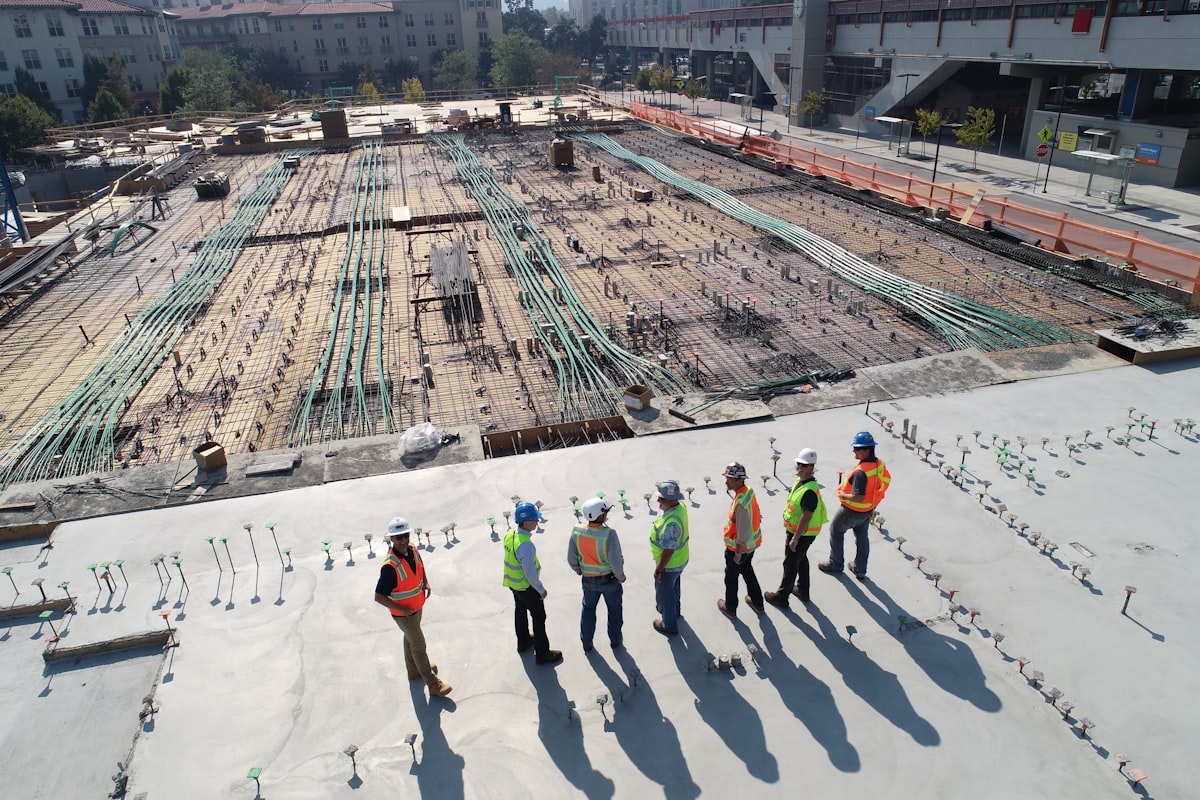
Why State Intervention Makes Midway Rising Virtually Unstoppable
The California Legislature's willingness to pass project-specific legislation shielding Midway Rising from environmental lawsuits demonstrates extraordinary political will that makes opposition efforts futile.
Historically, CEQA has been the most effective tool for community groups to delay or kill unwanted developments. By requiring comprehensive environmental impact reports and creating grounds for legal challenges, CEQA litigation has stopped countless California projects. The Sacramento Kings arena in 2013 and now Midway Rising in 2026 represent rare exceptions where state lawmakers intervened to circumvent standard environmental review processes.
Several factors explain why Midway Rising received this special treatment:
1. Affordable Housing Component
With 2,000 units restricted to households earning 80% of area median income or below, the project addresses California's housing crisis in a politically visible way. State lawmakers facing pressure to approve housing can point to Midway Rising as delivering 47% affordable units—an unusually high percentage.
2. Economic Impact Projections
The San Diego Regional Economic Development Corporation projects $285 million in annual economic impact, with $178 million being new spending across the county. For context, this exceeds the annual economic impact of Comic-Con.
3. Job Creation
21,900 temporary construction jobs plus 3,100 permanent jobs paying 12% higher average wages than the current retail mix on the site create political support from labor unions.
4. Developer Connections
The Kroenke Group's involvement brings significant political and financial resources. Stan Kroenke's experience developing SoFi Stadium in Los Angeles demonstrates the team's capability to execute massive projects.
5. City Ownership of Land
Because the city owns the 49-acre Sports Arena site, the project doesn't require contentious eminent domain proceedings or displacement of existing property owners.
Neighborhood opposition remains strong—the Peninsula Community Planning Board formally opposed SB 344, and the city-wide Community Planners Committee voted against it. However, political reality shows that local planning groups lack the power to stop state-level legislative interventions.
For Point Loma and Ocean Beach homeowners evaluating their options, the key insight is this: the project will happen. The only question is whether individual property owners want to remain in the area during the decade-long construction transformation.
What Changed Since December 2025: From Legal Uncertainty to Guaranteed Construction
Homeowners who followed Midway Rising news in late 2025 may remember a very different legal landscape. At that time, the project faced multiple challenges:
Legal Status in December 2025:
- • Measure C appellate court ruling in October 2025 had invalidated the height limit exemption
- • California Supreme Court had not yet ruled on the city's appeal
- • No state legislation existed to shield the project from CEQA lawsuits
- • Developer and city officials were exploring alternative legal pathways using density bonus laws
- • Construction timeline was uncertain, with many predicting delays into 2027 or 2028
Legal Status in September 2026:
- • California Supreme Court denied the city's appeal in January 2026
- • San Diego City Council repealed Measure C on August 25, 2026
- • California Legislature passed SB 344 on August 31, 2026, creating CEQA lawsuit shield
- • Governor Newsom expected to sign legislation
- • Developer publicly stating groundbreaking will occur by end of 2026
- • Construction timeline compressed from uncertain to imminent
The transformation from legal uncertainty to legal certainty is the critical change. In December 2025, prudent homeowners could reasonably adopt a "wait and see" approach, gambling that ongoing litigation might delay or modify the project. In September 2026, that option no longer exists.
The state legislature's intervention removed the final uncertainty. Even if Governor Newsom were to veto SB 344 (considered unlikely given his support for housing production), the project could still proceed under state density bonus laws that allow height limit exemptions for developments with sufficient affordable housing.
Point Loma and Ocean Beach property owners now face a compressed 90-120 day decision window before excavation begins. Those who list homes through traditional sales processes face 4-6 month average timelines in the current San Diego market, meaning homeowners who want to exit before construction noise and disruption begin must act immediately.
Cash buyers offer 7-14 day closing timelines, providing the only realistic path for homeowners who want certainty of sale completion before excavation equipment arrives on-site in late 2026.
Infrastructure Nightmare: 50,000 New Residents and 20,000 Additional Vehicles
The Peninsula Community Planning Board and Ocean Beach planning groups have consistently raised alarm about inadequate infrastructure to support Midway Rising's density. The combined impact of Midway Rising (4,250 units) and the nearby NAVWAR redevelopment (14,000 units) creates unprecedented challenges for Point Loma's road network.
According to Eric Law of the Peninsula Planning Board, the combined developments could bring 50,000 new people in less than one square mile, which would double the population of Point Loma. The associated vehicle traffic is estimated at approximately 20,000 new cars on roads that already experience congestion during peak hours.
Critical Infrastructure Concerns:
Traffic Circulation:
The Midway Rising project will not create new infrastructure outside the project's footprint. Once primary circulation routes become clogged, all ancillary roads will be affected as congested traffic seeks alternatives, including Sports Arena Boulevard, Midway Drive, West Point Loma Boulevard, Lytton Street, Barnett Avenue, Harbor Drive, Sea World Drive, and Interstate 5 on-ramps and off-ramps.
Parking Deficits:
Neighborhood groups argue the development plan includes insufficient parking for the arena, residential units, and commercial spaces. Overflow parking will spill into surrounding Point Loma and Ocean Beach residential streets.
Transit Inadequacy:
SANDAG's transit plan has been criticized for missing the mark in Ocean Beach and Point Loma. The MTS Route 923 and other existing bus services lack the capacity to absorb 50,000 new residents without significant expansions that are not currently funded.
Utility Capacity:
Water, sewer, and electrical infrastructure designed for the current 49-acre Sports Arena parking lot will require massive upgrades to support 4,250 residential units plus a 16,000-seat arena and 130,000 square feet of commercial space.
Emergency Services Access:
Point Loma's geographic constraints (peninsula bordered by the Pacific Ocean and San Diego Bay) mean limited evacuation routes during emergencies. Fire and police response times will increase with added congestion.
A March 2026 legal analysis claimed the environmental review of Midway Rising was flawed, with residents "destined to gridlock" and taxpayers likely paying for project infrastructure that should be developer responsibility.
For current Point Loma and Ocean Beach homeowners, these infrastructure deficits translate to longer commute times to downtown San Diego and other employment centers, reduced quality of life during construction (2026-2033), difficulty accessing their own homes during peak traffic periods, potential decline in property values as buyers factor in permanent traffic congestion, and noise pollution from arena events (concerts, sports) disrupting residential tranquility.
Cash buyers specializing in the San Diego market understand these dynamics and structure offers accordingly, providing homeowners with exit strategies before infrastructure problems materialize.
Polling Reveals Division: 67% Citywide Support vs. 50% Point Loma Opposition
Public opinion polling commissioned by Midway Rising developers reveals significant geographic divisions on the project. Conducted by Lieberman Data & Insights in April 2026, the survey shows:
Support:
- Citywide: 67% favor
- Point Loma/Ocean Beach: 57% support
- District 2 Overall: 56% support
- Renters: 78% support
- Democrats: 77% support
- Homeowners: 58% support
Opposition:
- Point Loma/Ocean Beach: 43% oppose
- District 2 Overall: 44% oppose
- Republicans: 48% support (52% oppose)
- Homeowners near site: Higher opposition
The polling data reveals a critical insight: support is weakest in the areas closest to the development. While citywide residents see benefits (affordable housing, new arena, job creation), those who will experience daily construction disruption and permanent infrastructure impacts are far more skeptical.
The 43% opposition rate in Point Loma and Ocean Beach represents thousands of homeowners who actively oppose the project but lack political power to stop state legislative intervention. These property owners face difficult choices:
- Option 1: Stay and Endure - Remain in their homes through 7-10 years of construction, hoping property values appreciate after project completion in the 2030s
- Option 2: Traditional Sale - List with a real estate agent, facing 4-6 month timelines and risk of buyers withdrawing due to construction disclosure concerns
- Option 3: Cash Sale - Accept below-market pricing in exchange for 7-14 day closings that guarantee exit before construction begins
The polling also reveals political strategy behind the project's approval. By delivering benefits that appeal to citywide voters (affordable housing, economic development) while concentrating costs on a geographically small area (Point Loma/Ocean Beach), developers and city officials built majority support even as local neighborhoods opposed.
Neighborhood groups organized town halls in July and August 2026 to air grievances against Midway Rising, NAVWAR, and SB 344. Hundreds of residents attended, with concerns about density, traffic, and the "end run around public input" that state legislation represents.
However, political activism cannot reverse Senate Bill 344's passage. The 72-vote Assembly majority and unanimous Senate vote demonstrate bipartisan consensus that overrides local opposition. For individual homeowners, the time for political advocacy has ended. The time for personal financial decisions has arrived.
Property Value Impact Analysis: Short-Term Pain, Long-Term Uncertainty
Point Loma maintains some of San Diego's highest property values, with February 2026 data showing:
- Single-family homes: $1,782,500 median (year-to-date)
- Condos/townhomes: $1,103,250 median
- Inventory: Just 2.3 months (one of the tightest coastal markets in San Diego)
The detached median is 64% above the county-wide average of $1,089,795, reflecting premiums for peninsula geography, bay and ocean access, and view corridors.
Midway Rising creates competing forces that will impact these values:
Negative Pressure (2026-2033):
- • Construction noise, dust, and traffic deters buyers during 7-10 year build-out
- • Disclosure requirements force sellers to inform buyers of nearby major construction
- • Traditional buyers with financing may struggle to secure appraisals during construction phase
- • Quality of life degradation causes some current residents to sell, increasing inventory
- • Uncertainty about final infrastructure impacts (traffic, parking, noise) creates buyer hesitation
Positive Pressure (2030s and beyond):
- • 14.5 acres of new parks and public space enhance neighborhood amenities
- • 130,000 square feet of commercial/retail adds walkable services
- • New 16,000-seat arena brings entertainment options
- • 4,250 housing units may stabilize regional home prices by increasing supply
- • Infrastructure improvements (within project footprint) could benefit adjacent areas
Geographic Variance: Properties within 0.5 miles of the Midway District will experience the most significant negative impact during construction. Homes with direct views of the construction site or along primary traffic routes (Sports Arena Boulevard, Midway Drive) face the greatest value pressure.
Properties in western Point Loma (Sunset Cliffs, Ocean Beach coastline) may experience less direct impact but will still face traffic congestion from 20,000 additional vehicles seeking access to I-5 and Pacific Highway.
Historical Precedent: San Diego's previous major construction projects offer guidance. Petco Park (2000-2004) saw downtown properties near the ballpark initially decline during construction, then appreciate significantly after completion as the Gaslamp Quarter revitalized. La Jolla Girard Avenue reconstruction (2025-2026) current $15 million infrastructure project has suppressed commercial property values during construction. SDSU Mission Valley (2020-2030) decade-long campus expansion is affecting nearby residential areas, with values recovering only after project phases complete.
The key difference: Midway Rising's scale dwarfs these comparisons. A $3.9 billion development transforming 49 acres over 10 years represents unprecedented disruption for a residential neighborhood.
Cash Buyer Perspective: Professional cash buyers price in construction impact by offering 10-20% below traditional market value, depending on proximity to the development. However, they provide certainty—guaranteed closing in 7-14 days with no financing contingencies, no appraisal requirements, and no risk of buyer withdrawal due to construction concerns.
For homeowners in the 60+ age demographic, the calculation often favors cash sales. Waiting 7-10 years for potential appreciation assumes the homeowner wants to remain in the area that long. For those seeking to relocate to quieter neighborhoods, retirement communities, or other cities, immediate cash sale provides capital to execute those plans now rather than enduring construction disruption.
The 90-120 Day Decision Window: Why Cash Buyers Are the Only Realistic Exit Option
With excavation expected in Q4 2026, Point Loma and Ocean Beach homeowners face compressed timelines that make traditional sales processes inadequate for those seeking to exit before construction begins.
Traditional Sale Timeline:
- Weeks 1-2: Select agent, prepare home, professional photography
- Weeks 3-6: Market home, hold open houses, negotiate offers
- Weeks 7-10: Buyer secures financing, inspection period, appraisal
- Weeks 11-16: Address inspection items, final loan approval, closing
Total: 4-6 months average in San Diego's current market
Cash Sale Timeline:
- Days 1-3: Request offer, property evaluation, receive written offer
- Days 4-7: Negotiate terms, sign purchase agreement
- Days 8-14: Escrow, title review, close and receive funds
Total: 7-14 days guaranteed
The math is simple: homeowners who want certainty of closing before excavation equipment arrives in November or December 2026 must initiate sales by September or October 2026. Those who choose traditional sales risk being mid-transaction when construction begins, potentially forcing them to reduce prices or accept contingent buyers.
Key Advantages of Cash Sales in This Scenario:
- No Appraisal Risk: Traditional buyers require appraisals that may be negatively impacted by imminent construction disclosures. Cash buyers purchase "as-is" without appraisal contingencies.
- No Financing Contingencies: With mortgage rates at 6.875% in September 2026, traditional buyers face affordability challenges. Cash buyers close regardless of interest rate fluctuations.
- No Inspection Negotiation: Cash buyers typically waive inspection contingencies or purchase with minimal repairs, eliminating weeks of negotiation.
- Guaranteed Close Date: Traditional sales often experience delays due to financing, title issues, or buyer cold feet. Cash sales provide contractual certainty.
- Reduced Carrying Costs: Every month a property remains unsold costs owners in mortgage payments, property taxes, insurance, and utilities. Fast closings minimize these costs.
- Construction Disclosure Exemption: While sellers must disclose known material facts, properties sold before excavation begins have less extensive construction impact to disclose compared to sales during active construction.
Who Should Consider Cash Sales:
- • Homeowners aged 60+ who don't want to endure decade-long construction
- • Property owners planning relocation for employment or family reasons
- • Individuals facing financial pressure (medical bills, debt consolidation, divorce)
- • Inherited properties where heirs want quick liquidation
- • Owners with deferred maintenance who don't want to invest in repairs before selling
- • Investors or second-home owners who view the 10-year construction period as poor investment timeline
Pricing Expectations: Cash buyers typically offer 85-90% of traditional market value, with the discount reflecting speed and certainty of closing (worth 5-10%), as-is purchase without repairs (worth 3-7% depending on property condition), no commission to buyer's agent (worth 2.5-3%), and elimination of seller carrying costs during marketing period (worth 1-2%).
For a Point Loma single-family home with $1,782,500 median value, a cash offer might range from $1,515,000-$1,604,000. While this represents $178,500-$267,500 below market, homeowners must weigh this against 6-12 months of carrying costs in traditional sale ($15,000-$30,000), real estate commission in traditional sale (5-6% = $89,125-$106,950), potential price reductions if construction begins during listing period, risk of deal falling through due to buyer financing issues, and stress and uncertainty of prolonged sales process.
When these factors are calculated, the net difference between cash sale and traditional sale narrows to $50,000-$100,000—a premium many homeowners gladly pay for certainty and speed.
What Point Loma and Ocean Beach Homeowners Should Do Now
With groundbreaking expected by end of 2026, homeowners in the Midway District's impact zone should take immediate action:
Step 1: Assess Your Personal Timeline
Will you realistically want to live in your current home through 2033? Consider your age, career plans, family situation, and tolerance for construction disruption.
Step 2: Evaluate Your Property's Exposure
Homes within 1 mile of the Sports Arena site will experience the most significant impact. Use mapping tools to determine your distance from the 49-acre development footprint.
Step 3: Request Multiple Cash Offers
Contact 3-5 reputable San Diego cash buyers to receive written offers. Compare terms, closing timelines, and reputations. Legitimate cash buyers provide no-obligation offers within 48-72 hours.
Step 4: Consult with Traditional Real Estate Agent
Get a comparative market analysis (CMA) to understand current market value. Discuss realistic timeline for traditional sale in current market conditions.
Step 5: Run Financial Comparison
Calculate total net proceeds from cash sale vs. traditional sale. Consider all costs including commission, repairs, carrying costs, and time value of money.
Step 6: Make Decision by October 31, 2026
To guarantee closing before excavation begins in late November/December 2026, homeowners should commit to sale strategy by end of October.
Red Flags for Cash Buyers to Avoid:
- • Companies requiring upfront fees before making offers
- • Buyers who won't provide proof of funds
- • Operators pressuring immediate decisions without due diligence period
- • Cash buyers with no verifiable local transaction history
- • Companies with poor Better Business Bureau ratings or unresolved complaints
Legitimate Cash Buyers Provide:
- • Free, no-obligation property assessments
- • Written offers within 48-72 hours
- • Proof of funds documentation
- • Flexible closing timelines (as fast as 7 days, or longer if seller needs time)
- • Transparent explanation of how offer price was determined
- • Professional references and verifiable transaction history
- • Licensed, bonded, and insured operations
For Point Loma and Ocean Beach homeowners, the August 31, 2026 legislative developments represent a clear inflection point. The decade of legal uncertainty is over. The project will proceed. Individual property owners must now prioritize their own financial interests and quality of life over hoping for political outcomes that will not materialize.

Frequently Asked Questions
When will construction on Midway Rising actually begin?
Developer Brad Termini of Zephyr has publicly stated that groundbreaking is expected by the end of 2026, with excavation and site preparation beginning in Q4 2026 (November-December). Vertical construction would start in 2027. The California Legislature's passage of Senate Bill 344 on August 31, 2026, removed the final legal barriers, making this timeline highly likely. The project will be built in two phases over approximately 10 years, with completion extending into the early 2030s.
How does Senate Bill 344 shield Midway Rising from environmental lawsuits?
SB 344, authored by Senator Akilah Weber Pierson, allows the developer to use an existing environmental review to comply with the California Environmental Quality Act (CEQA). The legislation specifies that the city's environmental review complies with CEQA and prevents future lawsuits challenging the project's environmental impact report. This is similar to the 2013 legislative carveout for the Sacramento Kings stadium in Sacramento. The bill passed the Assembly with 72 votes and received unanimous Senate approval on August 31, 2026.
What happened to Measure C, the 2022 ballot measure that lifted the height limit?
Measure C was a 2022 voter-approved ballot measure that exempted the Midway District from San Diego's 30-foot coastal height limit. However, in October 2025, an appellate court ruled that the city illegally put Measure C before voters without adequately informing them about environmental impacts required by CEQA. The California Supreme Court denied the city's appeal in January 2026, and the San Diego City Council officially repealed Measure C on August 25, 2026. Despite this repeal, SB 344's passage on August 31, 2026, made the local height limit legally irrelevant by providing state-level authorization.
How will Midway Rising affect traffic in Point Loma and Ocean Beach?
The combined Midway Rising (4,250 housing units) and NAVWAR redevelopment (14,000 units) could bring 50,000 new residents and approximately 20,000 additional vehicles to less than one square mile, according to the Peninsula Community Planning Board. The Midway Rising project will not create new infrastructure outside its footprint, meaning congestion will spill onto Sports Arena Boulevard, Midway Drive, West Point Loma Boulevard, Lytton Street, Barnett Avenue, Harbor Drive, Sea World Drive, and Interstate 5 access points.
Will my Point Loma property value increase or decrease due to Midway Rising?
Property values will likely experience negative pressure during the 7-10 year construction period (2026-2033) due to noise, dust, traffic, and buyer reluctance to purchase near active construction sites. Properties within 0.5-1 mile of the development will see the greatest impact. After completion in the 2030s, values may appreciate due to new amenities, but permanent traffic congestion from 50,000 new residents could offset these gains.
How quickly can I sell my Point Loma home to a cash buyer?
Reputable cash buyers can close transactions in 7-14 days. The typical process includes: (1) requesting an offer and property evaluation (Days 1-3), (2) reviewing the written offer and negotiating terms (Days 4-7), and (3) completing escrow and closing (Days 8-14). This timeline provides certainty for homeowners who want to exit before excavation begins in late 2026.
What percentage below market value do cash buyers typically offer?
Cash buyers typically offer 85-90% of traditional market value for Point Loma properties. For a home with a $1,782,500 median value, a cash offer would range from $1,515,000-$1,604,000. When accounting for traditional sale costs (5-6% commission plus carrying costs), the net difference narrows to $50,000-$100,000.
Can anything still stop Midway Rising from being built?
No. The combination of SB 344's CEQA lawsuit shield, the Measure C repeal, state density bonus laws allowing height exceptions for affordable housing, and overwhelming bipartisan legislative support make the project virtually unstoppable. Neighborhood opposition and planning board votes cannot override state legislative action.
Sources & Citations
- California lawmakers greenlight Midway Rising, bypassing environmental hurdles
- California lawmakers greenlight a new San Diego sports arena, bypassing environmental hurdles
- Under orders from judge, San Diego repeals ballot measure lifting Midway height limit
- City Council Repeals Measure C Which Allowed Midway Rising to Bypass Coast Height Limit
- San Diegans are onboard with Midway Rising, polling by development team says
- Concerns Mount with Midway Rising and NAVWAR Redevelopments: Additional 50K Residents